Section element
Account and KYC
Axe’s account rules cover age, duplicate accounts, Bitcoin identification, general KYC, payment-method ownership and withdrawal review. The February 2026 terms say BTC users must submit valid ID before playing, while withdrawal requests can remain pending until all required KYC steps are complete. Account planning therefore starts before cashout: the identity, address and payment information used at sign-up and deposit can matter later.
Account setup
Registration creates a personal account with eligibility and identity obligations
Axe permits one personal player account per individual. The terms also treat accounts sharing the same residential address, household, IP address or device as possible duplicates and reserve the right to close duplicate accounts, cancel pending withdrawals and confiscate winnings linked to them. That makes account ownership and household use important from the start.
Players must be at least 18 or the higher legal gambling age that applies where they live. Axe can request proof of age, and real-money access is limited to jurisdictions where online gambling is lawful under the terms. The restricted-country list is separate from age eligibility, so meeting the age threshold alone does not establish account eligibility.
Account credentials must remain personal. The terms prohibit sharing the account or allowing another person, including a minor, to use it. This also matters for payment ownership: when the casino asks for proof of a card, wallet or e-wallet, the information should align with the person who owns the player account.
Bitcoin has an earlier identity step
The terms contain a specific BTC rule: valid ID must be submitted before playing, and BTC deposits and bets are blocked until that requirement is completed.
KYC timing
Identity checks can occur before play or while a withdrawal is pending
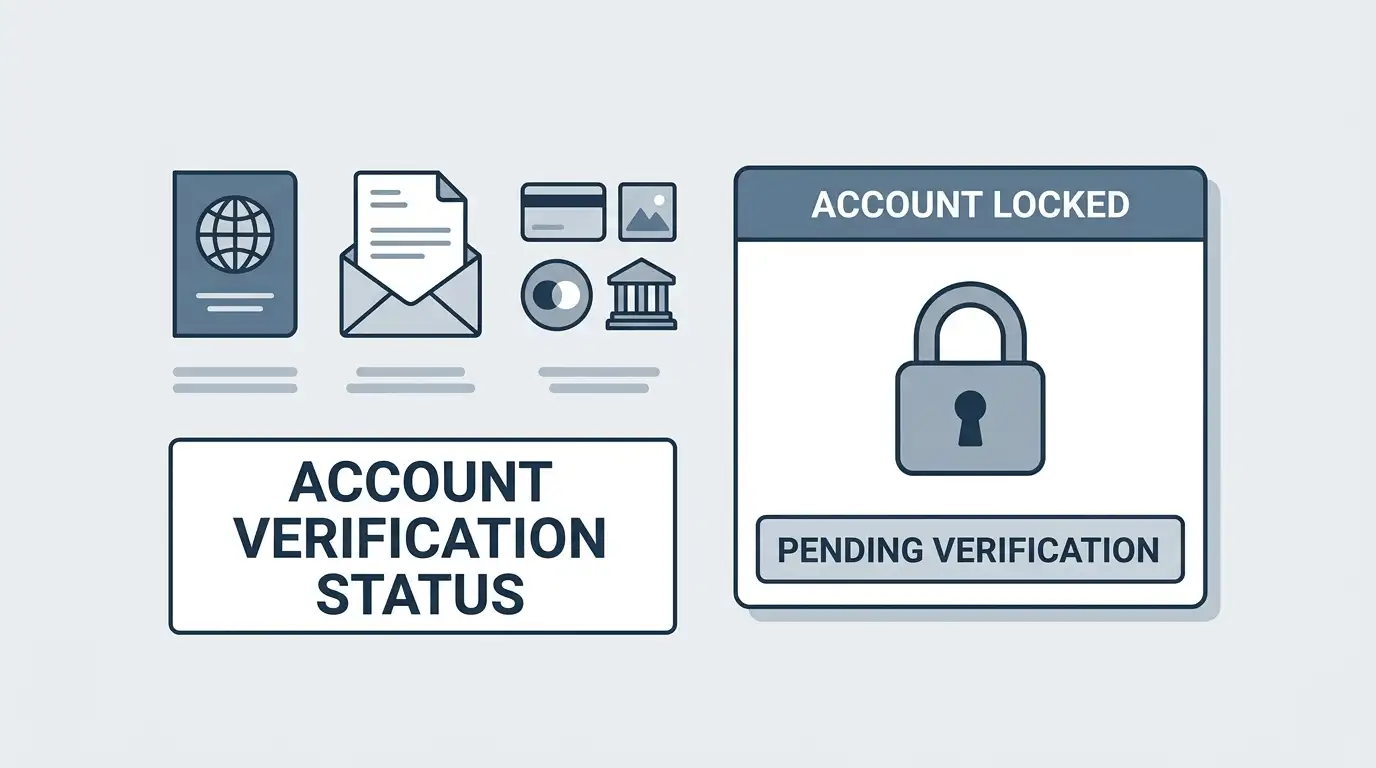
Axe does not use a single KYC moment for every account action. Bitcoin users face the pre-play ID rule, while the general KYC section allows additional documents or a phone call to establish identity. Withdrawal requests remain pending until required steps are completed.
The account rules also set a contact window around withdrawals. If Axe cannot reach a player by phone or email within two weeks of a withdrawal request, the terms say the account will be locked and the withdrawal cancelled. This means keeping accurate contact information is part of cashout readiness, not merely an administrative preference.
KYC is different from payment settlement. A crypto transfer can be technically fast after approval, but identity or payment-method questions can keep a request in the account stage. Likewise, a bank or card payout can take additional time after the casino finishes its own processing.
For that reason, a useful cashout plan assumes two clocks: the account-review clock and the external payment clock. Axe says it aims to process withdrawals within 72 hours after approval, which is not the same as promising that every withdrawal reaches the player within 72 hours of the original request.
Documents
The terms name identity, address and payment-method material
The KYC and anti-fraud sections provide concrete examples of documents Axe can request. A government-issued photo ID can establish identity and age. A utility bill or bank statement can support the residential address. Proof of the payment method can connect a card or e-wallet to the account holder.
| Purpose | Examples | Preparation point |
|---|---|---|
| Identity | Passport or driving licence | Use a valid, readable document with matching account details. |
| Address | Utility bill or bank statement | The residential details should match the account information. |
| Payment method | Card images or e-wallet screenshot | Protect unrelated sensitive data while following the casino’s stated submission instructions. |
| Additional identity step | Video or phone contact can be required in some circumstances | Keep the registered email and phone details accessible. |
The terms mention Latin or Cyrillic script for identity material and allow a video step when documents do not meet the requested script requirement. Because document handling involves sensitive personal information, files should be sent only through the account or support route specified by Axe, not through unsolicited messages or unfamiliar domains.
KYC documents should also be kept distinct from cryptocurrency secrets. A casino can need proof of a payment method, but a legitimate identity process does not require disclosure of a wallet seed phrase or private key.
Cashout sequence
Withdrawal readiness includes wagering, KYC, limits and payment routing
Axe’s terms require a deposit to be wagered three times before those deposited funds may be withdrawn. If multiple deposits are made without gameplay, the combined deposits can be used for that requirement. Bonus wagering is a separate layer and can be much higher; the standard EUR welcome package uses 45× wagering on the bonus amount.
A typical account sequence
- Deposit successfully. The payment institution must process the deposit before it appears in the Axe balance.
- Meet applicable wagering conditions. Cash deposits and bonus funds can have different turnover rules.
- Submit the withdrawal request. The amount must meet the minimum for the chosen currency or cryptocurrency and fit the available payment route.
- Complete required KYC. Identity, address, payment-method or contact steps can keep the request pending.
- Casino processing and payout. Axe aims to process withdrawals within 72 hours after approval; the external rail can then add its own timing.
The overall withdrawal caps are also relevant for larger balances: €/$/CHF 4,000 per day, 10,000 per week and 25,000 per month, with separate NOK equivalents. Progressive jackpot wins are excluded from these limits. Higher VIP status can allow exceptions at the casino’s discretion, but an exception should not be assumed before it appears on the account.
Refunds follow a related but distinct path. Axe’s refund policy says refunds can require a photo ID, proof of the payment method and proof of address, and the casino can use a phone call as part of KYC. Refund payouts are typically processed within five to seven banking days from approval. A refund is therefore not simply a withdrawal under another name; it has its own conditions and timetable.
Dormancy is another account-state issue. After twelve consecutive months without login or gameplay, the terms allow Axe to classify an account as inactive and charge a €25 monthly dormancy fee or currency equivalent from the remaining balance. Logging in and placing a wager reactivates the account under that section. Anyone leaving a balance unused for a long period should understand this rule before assuming the funds will remain untouched indefinitely.
Account security
Identity files, passwords and crypto credentials require different handling
KYC can involve valuable identity material, while crypto payments can involve irreversible transfers. Keeping those risks separate helps prevent a routine account check from turning into a broader security problem.
- Use the official Axe domain and account interface for sensitive uploads.
- Keep account passwords unique and do not share them with other household members.
- Never disclose a cryptocurrency seed phrase or private key as part of KYC.
- Review wallet addresses and network labels before approving a crypto transfer.
- Keep the registered email and phone number accessible so a withdrawal review is not stalled by missed contact.
- Log out on shared devices and avoid storing identity files in browser download folders longer than necessary.
Axe’s rules allow account closure for duplicate accounts, fraud and failure to complete required identity steps. Good security therefore includes both technical protection and consistent personal information across the account, payment method and KYC material.
Transaction records can also support account security. Keep deposit confirmations, withdrawal request dates and any support reference numbers until the payment has completed. For crypto, save the transaction hash rather than screenshots of secret wallet material. A transaction hash can help trace a public blockchain transfer without exposing the private key that controls the wallet.
Key takeaways
Treat KYC as part of account use rather than a last-minute cashout task
The February 2026 terms make identity requirements part of the product itself. BTC users face an ID requirement before play, other KYC steps can arise during account use, and withdrawals remain pending until required account checks are complete.
Keeping account details accurate, using payment methods that belong to the account holder, understanding the deposit-wagering rule and retaining access to the registered contact channels can reduce avoidable delays when a withdrawal is requested.
FAQ
Account and KYC questions
Does Axe require ID for Bitcoin play?
Yes. Axe’s terms say BTC players must submit valid identification before playing and that BTC deposits and bets are blocked until that step is completed.
What KYC documents can be requested?
The terms name government-issued photo ID, proof of address and proof of payment method. A phone call or additional identity step can also be required.
Can KYC delay a withdrawal?
Yes. Withdrawal requests remain pending until required KYC steps are complete. The 72-hour processing target begins after approval, not necessarily at the moment the request is submitted.
Is there a wagering rule on ordinary deposits?
Yes. Axe’s terms require deposits to be wagered three times before those deposited funds can be withdrawn. Bonus wagering is separate.
How many Axe accounts can one person have?
The terms allow one personal player account per individual and contain duplicate-account rules covering shared household, address, IP and device circumstances.